
Massage chair for a tall person: how to get the fit right
Buying a massage chair when you stand 6’2″ or taller is a different problem from buying one at average height. Most chairs are engineered around a body shorter than yours, and the mismatch shows up exactly where you would notice it: neck rollers landing between your shoulder blades, a headrest that supports nothing, calves pressed against a footrest that stops several inches short. Finding the right massage chair for a tall person is less about brand prestige and more about three measurable specifications. Footrest extension range matters more than overall chair length here, and it is listed for each of our full body massage chairs.
The design window exists for a reason. According to CDC National Center for Health Statistics data collected between August 2021 and August 2023, the average American man measures 68.9 inches and the average woman 63.5 inches. Manufacturers build around that center, which is why taller buyers have to read spec sheets more carefully than anyone else. This guide covers the specifications that decide fit, how to measure yourself before ordering, and where custom massage chairs change the math.
Can a tall person use a massage chair comfortably?
Yes, provided the chair’s roller track length, footrest extension range, and manufacturer-stated height range all accommodate your frame. Height alone does not disqualify anyone. A poorly matched chair does, and no amount of software adjustment fully compensates for a track that is physically too short. Before comparing features across the massage chairs for sale in any showroom, confirm the fit specifications first — everything else is secondary if the frame does not match your body.
The three specifications that decide fit
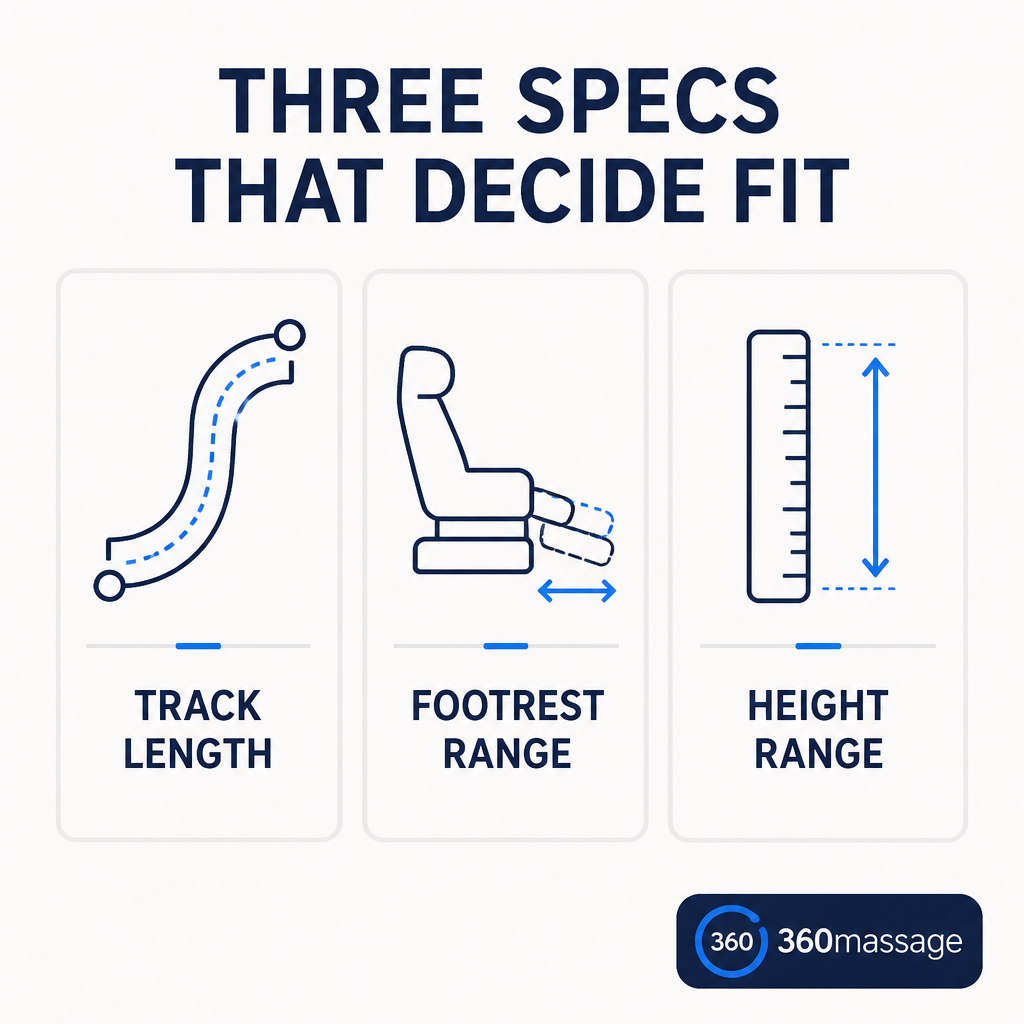
Massage chair listings lead with roller dimensions, program counts, and airbag totals. For taller users, three quieter numbers matter far more.
1. Roller track length and type
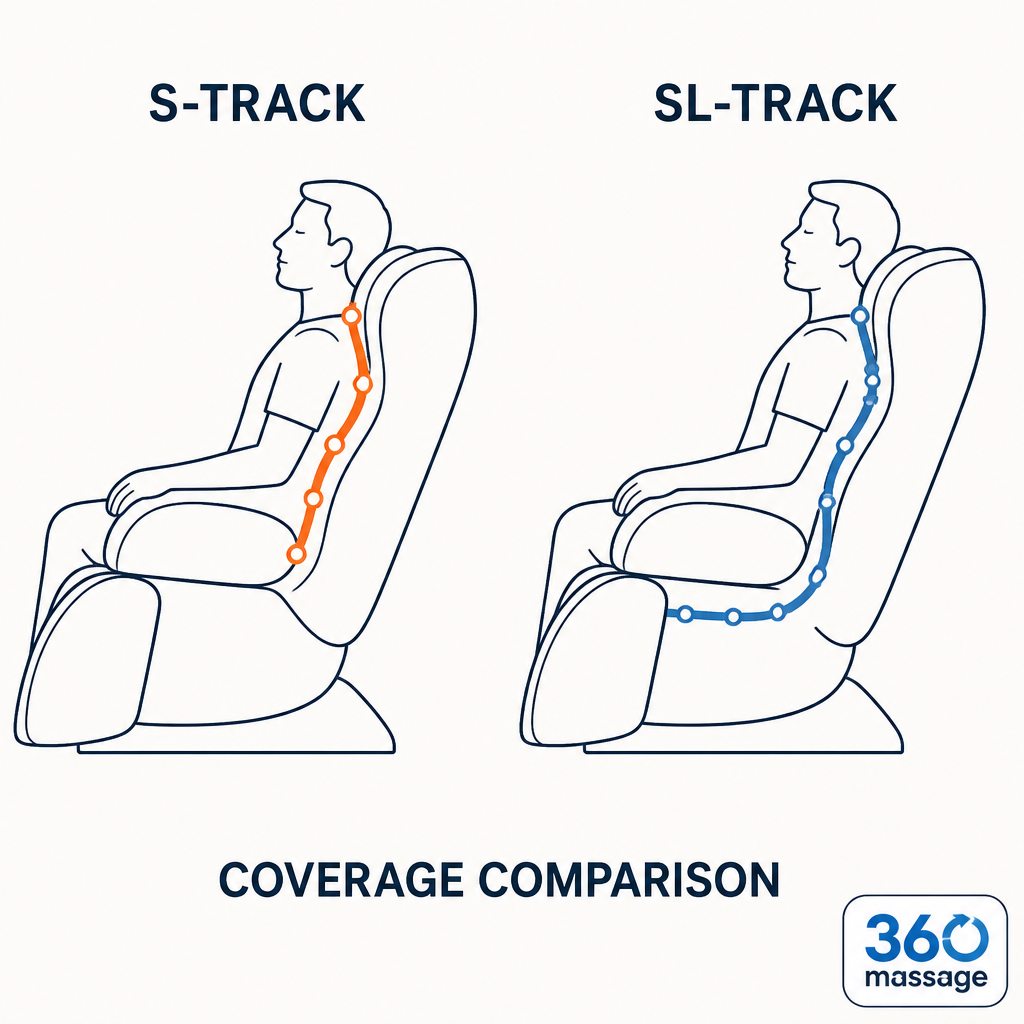
The track is the rail the rollers travel along, and its length determines how much of your back the massage actually reaches. Traditional S-track systems typically run under 31 inches and follow the spine from neck to lower back. Extended SL-track and L-track systems generally range from 40 to 53 inches, continuing past the lower back into the glutes and upper hamstrings. On a taller frame, that extra coverage is the difference between a massage that reaches your lumbar region and one that runs out somewhere around your mid-back. An SL-track massage chair is generally the practical starting point above 6’0″. Roller sophistication still matters — the distinction between 3D and 4D massage chairs affects depth and rhythm — but track length decides coverage, and coverage comes first.
2. Footrest and leg extension range
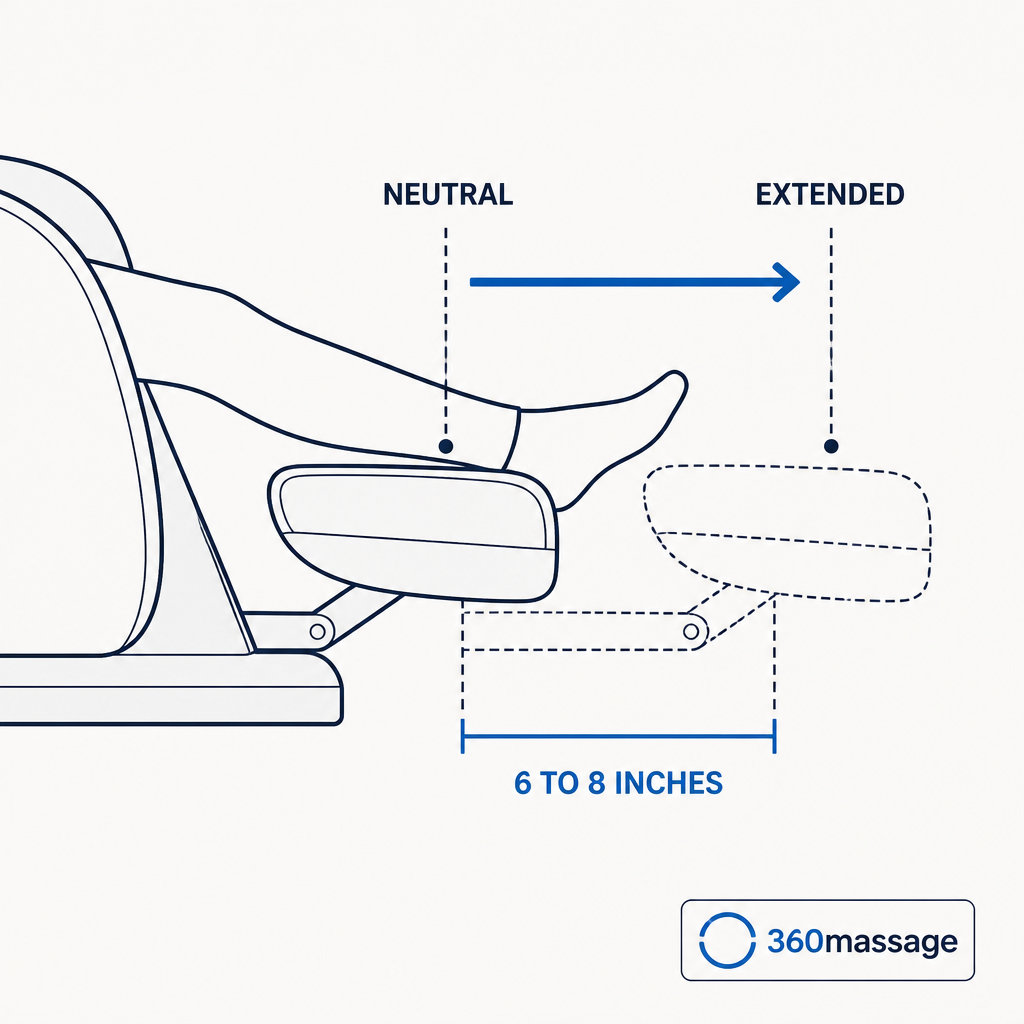
The footrest is where tall buyers get caught most often. A fixed or minimally adjustable ottoman positions the calf rollers relative to an average leg, so longer legs end up with rollers pressing against the shins and foot airbags gripping the ankles instead of the feet. Look for a meaningful extension range: at least 5 inches beyond neutral, and ideally 6 to 8 inches for users above 6’2″. Because foot massagers in massage chairs are calibrated to a specific foot position, an extension that cannot reach your actual leg length disables one of the most valued parts of the session.
3. The manufacturer’s stated height range
Most manufacturers publish a recommended range, commonly around 5’0″ to 6’2″. Some premium models extend to 6’4″, 6’5″, or higher. Treat this figure as a constraint rather than a suggestion, and verify it before ordering rather than after delivery. It is the single most useful number on the page when buying a massage chair at above-average height.
Why torso length matters more than total height
Two people of identical height can have very different experiences in the same chair. What the backrest has to accommodate is your seated torso — hip to shoulder — not your standing height. Someone who is 6’3″ with long legs and an average torso may fit a standard backrest comfortably while needing maximum footrest extension. Someone who is 6’1″ with a long torso and shorter legs may face the opposite problem, with the shoulder airbags sitting too low.
This is where body scanning in massage chairs earns its place. A scan maps your shoulder and neck position at the start of a session and shifts the roller path accordingly, which meaningfully improves targeting within the chair’s physical range. It cannot extend a track that ends too early, but it can make sure that the available coverage lands where it should.
What goes wrong when the chair is too short
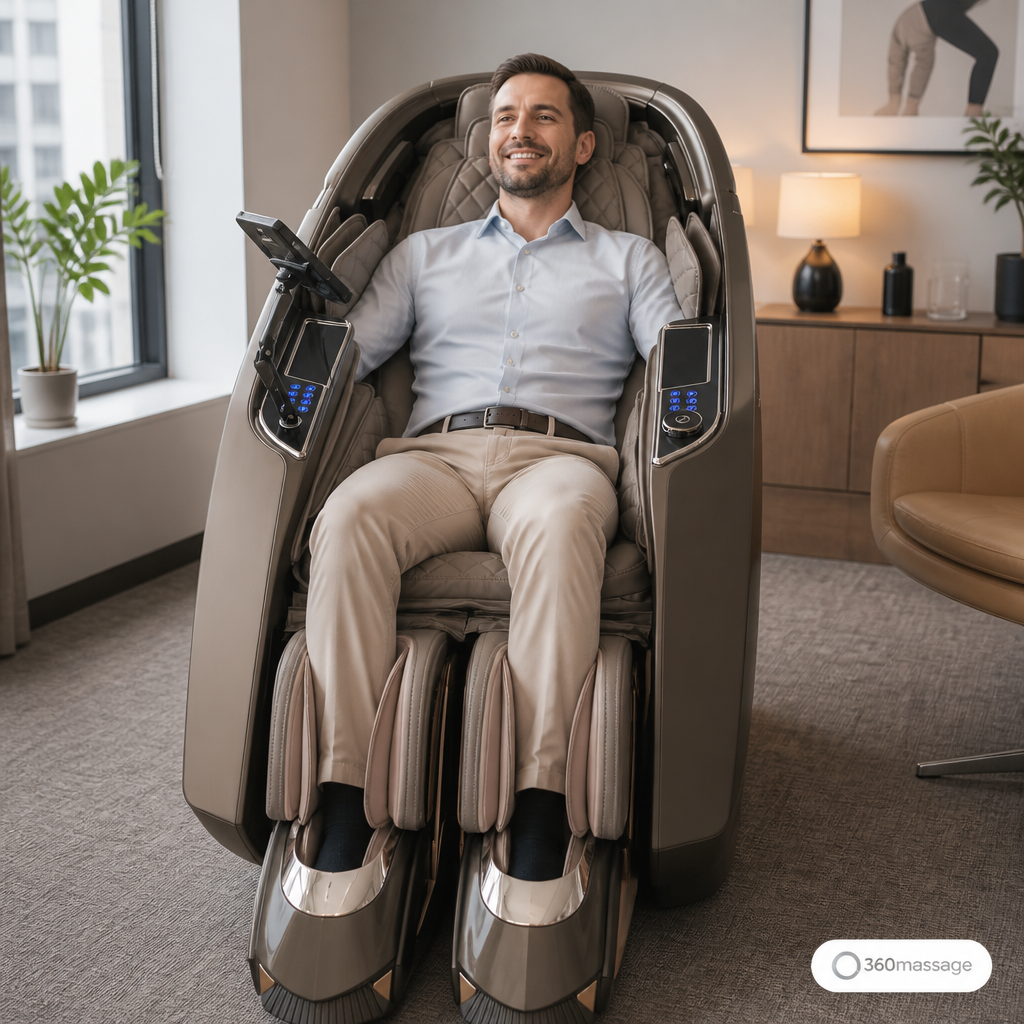
An undersized chair does not simply feel less impressive. The problems are specific and repeatable:
| Mismatch | What you experience |
|---|---|
| Track ends above your lumbar region | Neck and shoulder rollers land on the upper back; lower back gets little or nothing |
| Headrest positioned too low | No cervical support, so the neck stays tensed through the session |
| Footrest too short | Rollers press on the shins; feet hang past the ottoman |
| Shoulder airbags below shoulder height | Compression squeezes the upper arms instead of the shoulders |
The consequences compound over time. If your reason for buying is persistent tension, a chair that misses the target region may deliver very little of what you wanted — worth keeping in mind if you are considering a massage chair for back pain. Recline behavior matters too: research on seated posture indicates that reclining alters spinal curvature, and reviews of intradiscal pressure across postures consistently find that seated positions load the lumbar spine differently than reclined ones. A zero gravity massage chair can only deliver that repositioning if your body fits the recline geometry in the first place.
How to check your fit before you order
Five minutes with a tape measure prevents most fit disappointments:
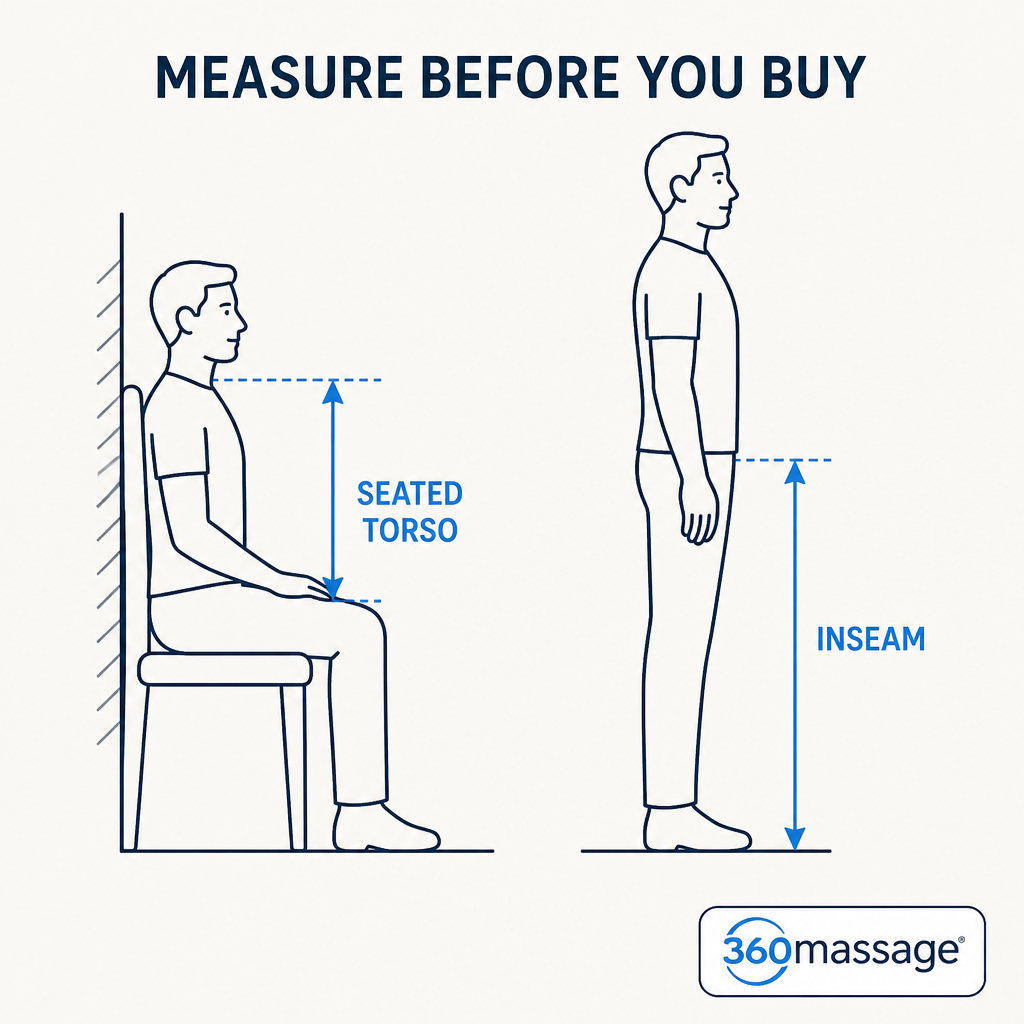
- Measure your seated torso. Sit upright against a wall and measure from the seat surface to the top of your shoulders, then to the top of your head.
- Measure your inseam. Floor to crotch, which tells you how much footrest extension you actually need.
- Compare against the spec sheet. Check stated height range, track length, and footrest extension — not the marketing copy.
- Test in reclined position where possible. Fit problems appear in recline, not upright.
- Measure your room. Larger-frame chairs need more clearance behind and in front; a few interior design adjustments usually solve placement.
What to look for in a 360massage chair
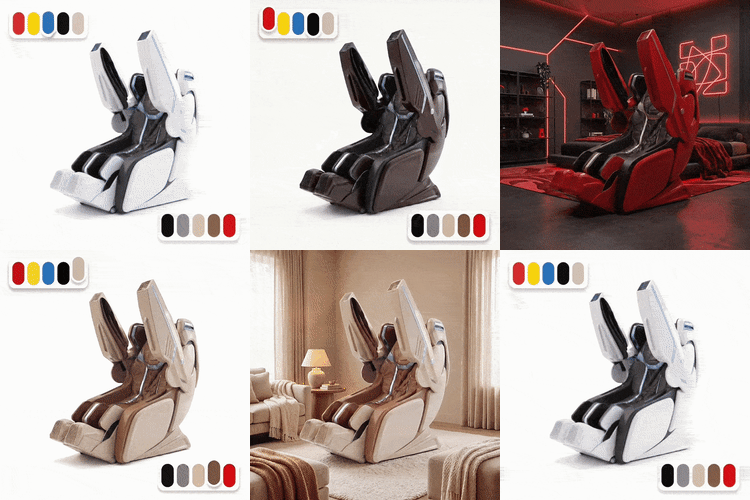
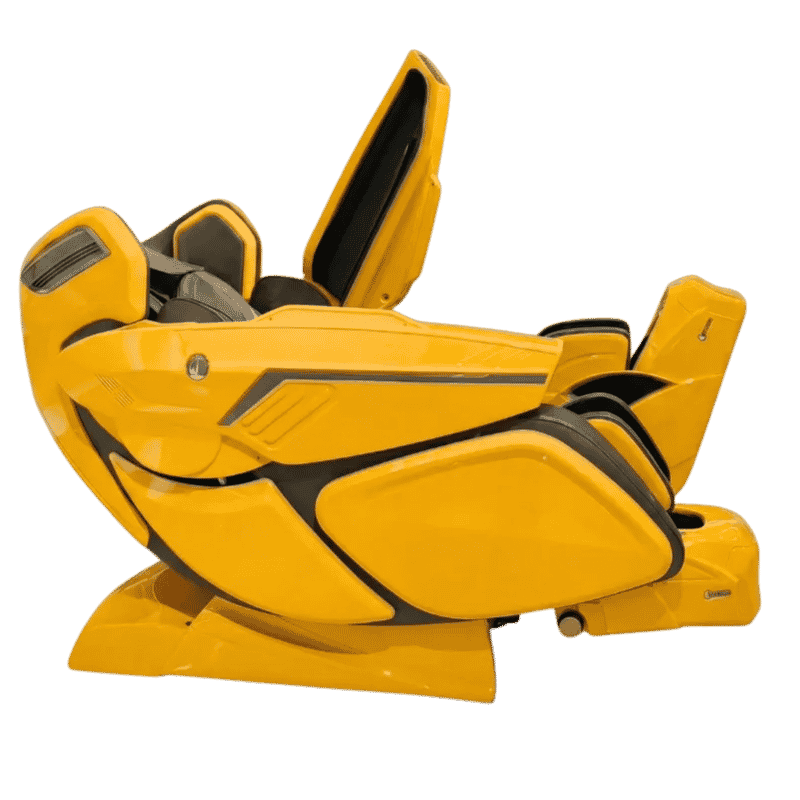
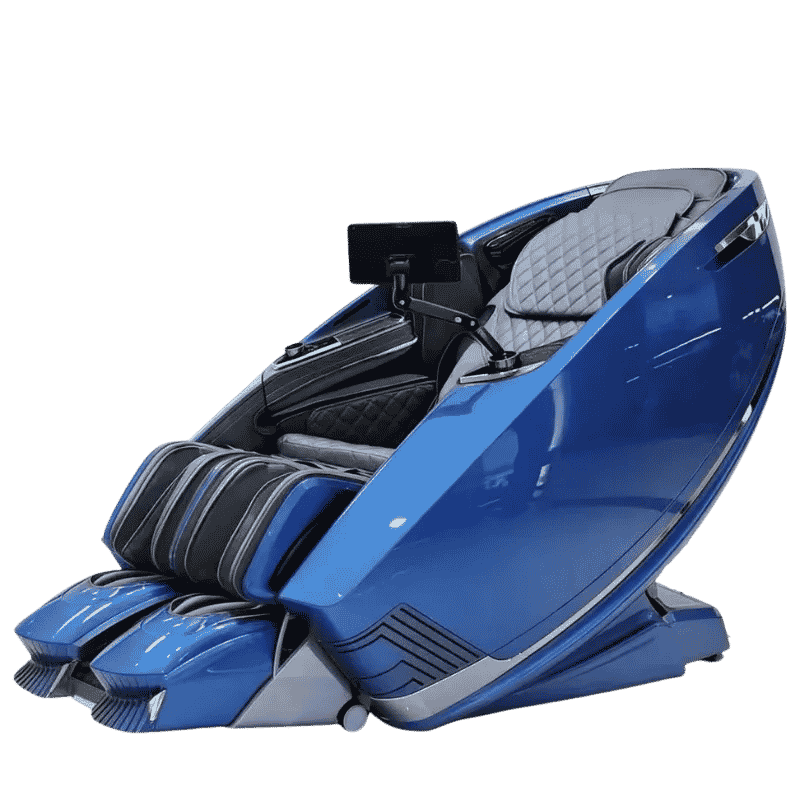
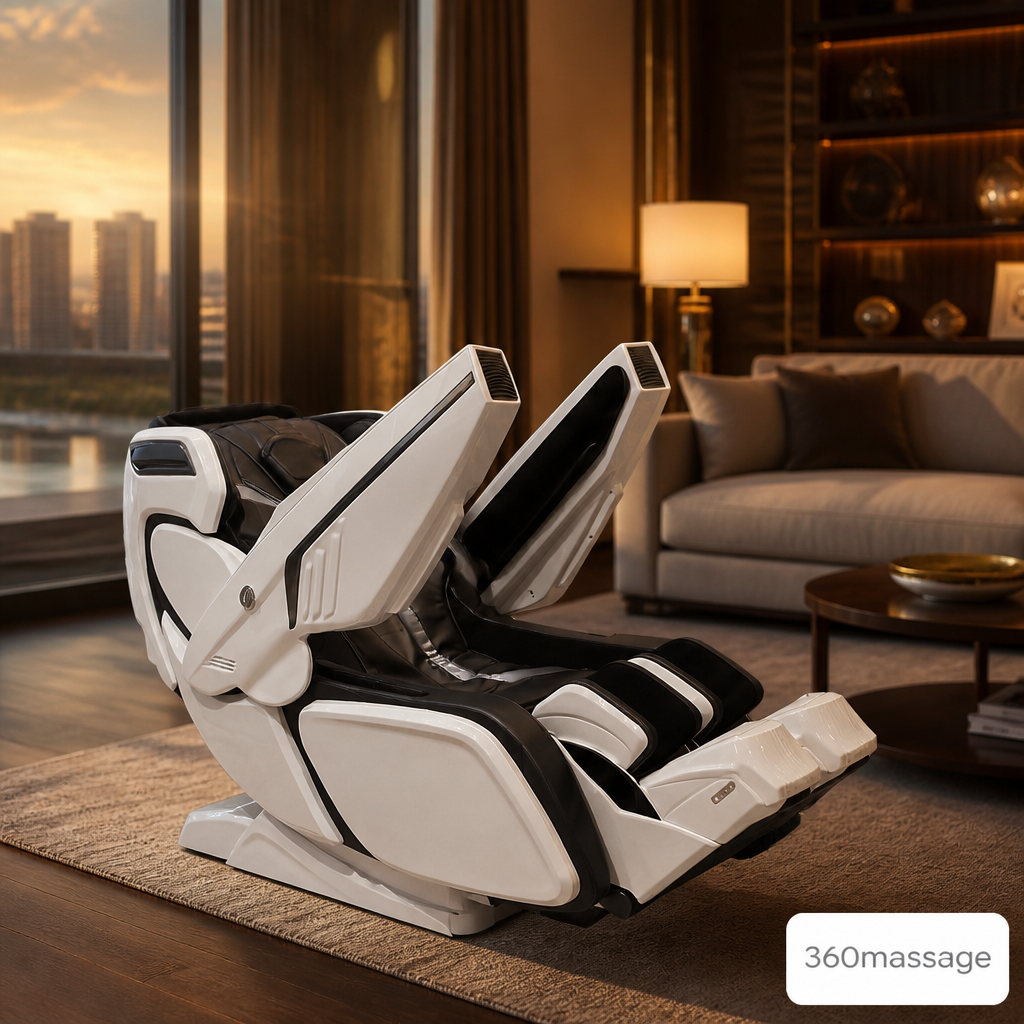
Across the 360massage range, the features that matter most to taller users are automatic leg extension and smart body scanning, both of which adapt positioning to different heights and body shapes rather than assuming an average frame. The Weltron pairs an automatic leg-extension mechanism with adaptive massage intelligence, while Ayla is built around consistent daily recovery sessions and Rayan balances refined design with full-body coverage. Because every chair can be customized, buyers who need a specific configuration are not limited to what happens to be on the floor. If you are weighing tiers, our guides to luxury massage chairs and the best massage chairs compare coverage and technology side by side.
One practical note: confirm the exact recommended height range for your chosen model with our team before ordering. Published ranges vary by configuration, and a two-minute conversation is more reliable than an assumption.
Frequently asked questions
Is there a maximum height for massage chairs? Every model has a manufacturer-stated maximum, commonly between 6’2″ and 6’5″. Above roughly 6’6″, options narrow considerably and verification before purchase becomes essential.
Does a longer track always mean a better fit? Not by itself. A long track paired with a short footrest still leaves your legs unsupported. The two specifications work together.
Do premium chairs fit tall users better? Often, though not automatically. Higher-tier models tend to include longer tracks and greater extension ranges, which is why the most expensive massage chairs frequently accommodate taller frames — but always check the specific numbers rather than assuming price guarantees fit.
The bottom line
Choosing a massage chair for a tall person comes down to matching three numbers to your body: track length, footrest extension, and stated height range. Get those right and height stops being a limitation. Measure your seated torso and inseam, compare them against the specifications rather than the marketing, and confirm the range with a specialist before ordering. If you would like help matching a model to your measurements, our team can walk through the specifications with you.

Design Your Chair Yourself