


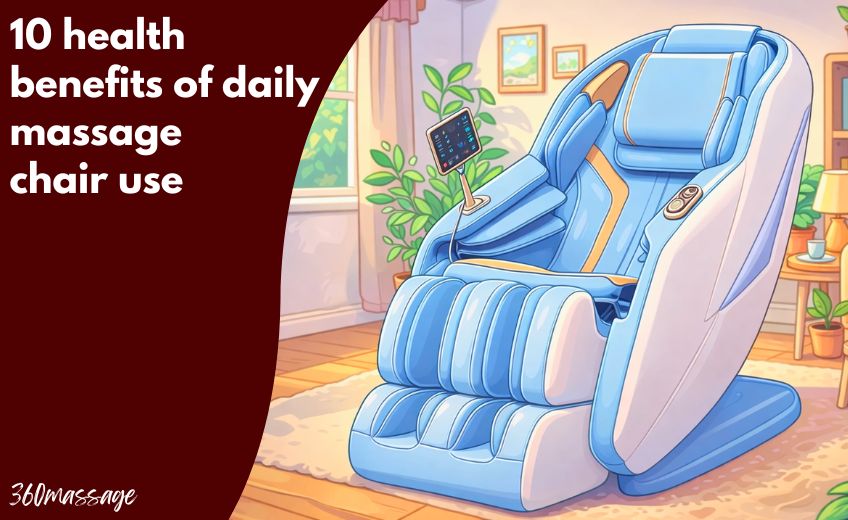
10 Health benefits of daily massage chair use
Using a massage chair every day won’t turn you into a new person overnight.
But it can help your body calm down, loosen up, and function a little better, which, honestly, is already a win.
Most of what we know comes from massage therapy research in general, plus a growing number of clinical studies on automated massage chairs. The takeaway is simple: massage chairs can support well-being, as long as we don’t pretend they’re medical devices or miracle machines.
Here’s what regular use may actually help with.
Lowers stress and promotes relaxation
Massage therapy has long been associated with lower stress and better relaxation. Hospitals and integrative medicine centers agree on this one.
In a randomized controlled trial, healthcare workers who used an automated massage chair showed significant reductions in stress after 6 and 12 sessions compared to a simple relaxation technique.
In other words, sitting still and hoping for the best is nice. Gentle pressure seems to work better.

Helps relieve muscle tension and pain
We all have experienced it after a long desk job; our necks get so stiff that we move like a robot or Michael Keaton’s Batman. Massage chairs can fix that!
Massage is widely recognized for helping with:
- Low-back pain
- Neck and shoulder tension
- Joint discomfort
- Post-workout soreness
Massage chairs try to mimic these effects using mechanical pressure and movement. It’s not the same as human hands, but it’s also available at 11:47 pm, which counts for something.

improves mood, anxiety, and depressive symptoms
Massage is often included in integrative care plans for anxiety, stress, and low mood, not because it “fixes” mental health, but because the nervous system responds well to being calmed.
In one clinical trial, healthcare professionals using an automated massage chair reported lower depression scores, along with reduced stress and physical pain.
No life revelations. Just fewer rough edges.

Supports better sleep quality
Massage has been linked to improved sleep quality, largely because it helps the body shift out of stress mode.
By relaxing muscles and calming the nervous system, massage may help you fall asleep and stay asleep. It’s also used to help manage insomnia and tension headaches, both of which are famously bad for bedtime.
If your brain usually schedules its overthinking session at 2 a.m., this might help interrupt that meeting.

Enhances circulation and reduces stiffness
Improved circulation, reduced stiffness, and reduced joint tightness are common outcomes of massage.
That’s why massage is often used during rehabilitation after injuries or joint replacements to restore movement and reduce discomfort.
For people who sit a lot (desk, couch, repeat), regular use of a massage chair may help counteract the slow, sneaky stiffness that builds up over time.
Supports immune function and inflammation control
Some research suggests massage may influence immune activity.
Studies have shown increases in natural killer cell activity, which plays a role in the body’s response to viruses. In one trial focused on automated massage chair use, participants showed lower levels of myeloperoxidase, a marker linked to inflammation.

Complements the management of chronic conditions
Massage is commonly used alongside standard medical care for conditions like:
- Cancer-related symptoms
- Heart disease
- Fibromyalgia
- Digestive disorders
It doesn’t treat these conditions, but it can help people manage pain, stress, and discomfort, which, day to day, matters a lot.
Organizations focused on arthritis also report that regular massage may reduce pain and improve function in osteoarthritis and chronic low-back pain.
Supportive, not heroic. That’s the role here.

Supports recovery from exercise and daily strain
Athletes and rehab professionals use massage to reduce soreness, improve flexibility, and speed recovery.
For non-athletes (also known as “people with jobs”), massage may help offset daily strain, especially from sitting, standing, or repeating the same movements all day.
No gym membership required. No motivational speech either.

positively influences stress hormones
Massage has been linked to changes in hormones involved in stress and inflammation.
Some studies suggest it can lower cortisol, the body’s main stress hormone, and influence other hormonal markers. A six-month study on massage chair use found reductions in DHEA-S and a trend toward lower cortisol levels.

A convenient self-care tool for mental well-being
Most people who use massage do it for health reasons, such as pain, stiffness, stress, headaches, and recovery.
Massage chairs offer something very specific: repeatable care, on demand, without planning. That’s why researchers see them as a practical option for people with busy schedules or high-stress jobs, such as healthcare workers, caregivers, or anyone whose calendar hates them.
Sometimes the best self-care is the kind you don’t have to organize.


