


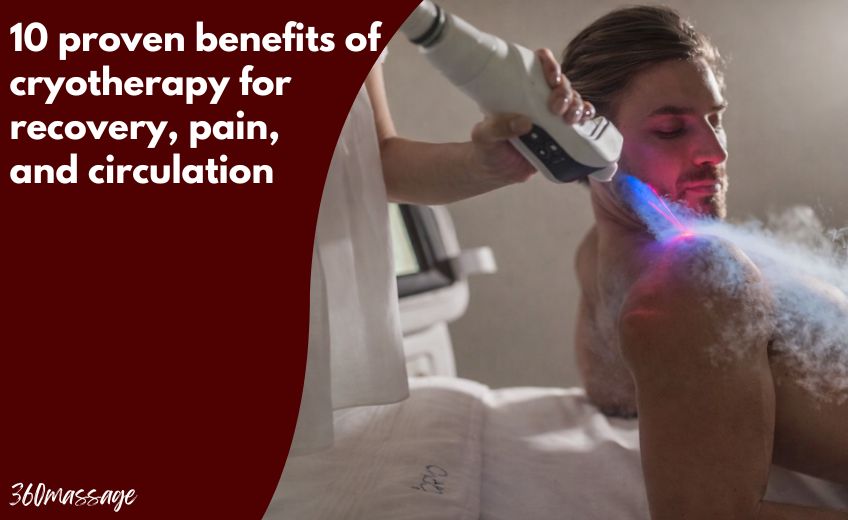
10 proven benefits of cryotherapy for recovery, pain, and circulation
Cold has always been medicine’s quiet overachiever. The simplest example is when you wash your face in the morning or take a cold shower and feel refreshed.
Long before wellness influencers discovered ice baths, doctors were already freezing tissue, calming inflammation, and managing pain with cold exposure. Today, cryotherapy sits at the intersection of sports recovery, clinical medicine, and modern wellness.
Cryotherapy, when applied with purpose, delivers real, measurable benefits for recovery, pain control, and select medical conditions.
Let’s break it down properly.
What is cryotherapy? How good is cryotherapy for recovery?
Cryotherapy, also known as cold therapy, is a therapeutic technique that uses extreme cold to achieve specific biological effects. Depending on how it’s applied, cryotherapy can:
- Reduce pain
- Limit inflammation and swelling.
- Destroy abnormal or diseased tissue.
- Support recovery after injury or surgery
It exists in several medically recognized forms, ranging from something as simple as an ice pack to advanced liquid-nitrogen procedures performed in clinical settings.

What are the different types of cryotherapy?
Cryotherapy is not one single treatment; it’s a category.
Local cryotherapy includes ice packs, cold sprays, and cold-water immersion. These are widely used in sports medicine and rehabilitation to control pain and swelling after injury or intense exercise.
Cryosurgery uses liquid nitrogen or other gases at extremely low temperatures to freeze and destroy abnormal skin cells, such as warts or precancerous lesions. This is a standard dermatological procedure with decades of clinical use.
Whole-body cryotherapy (WBC) exposes the body to nitrogen-cooled air at temperatures between −100°c and −160°c for short periods, typically 2–4 minutes.
Different tools. Different purposes. Same underlying principle: cold changes biology.
How cryotherapy works in the body
When tissues are exposed to extreme cold, several physiological responses occur:
- Blood vessels constrict, reducing swelling and metabolic demand.
- Nerve conduction slows, creating a natural analgesic effect.
- Inflammatory signaling is suppressed.
- Upon rewarming, blood flow returns, sometimes increasing circulation temporarily
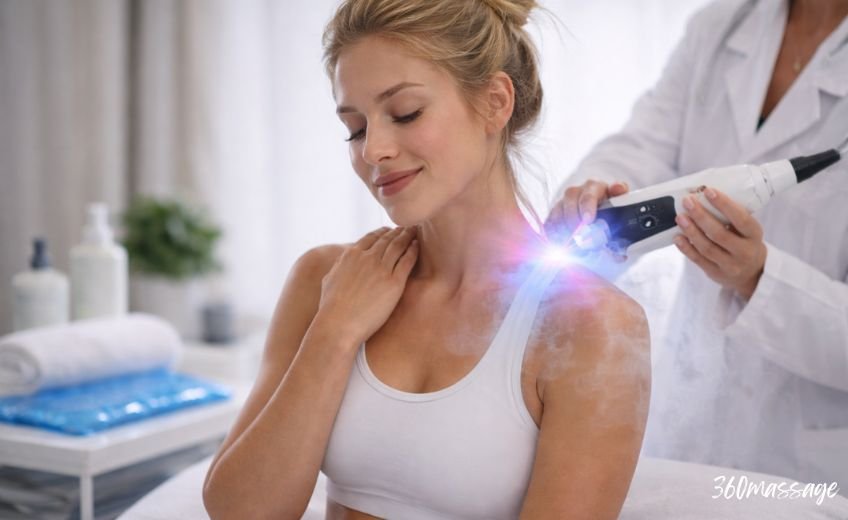
In cryosurgery, freezing causes ice crystals to form inside cells, damaging membranes and leading to controlled tissue destruction. In recovery settings, the goal is not destruction but regulation.
What are the 10 proven benefits of cryotherapy?
Reduces pain through a natural analgesic effect
Cryotherapy slows nerve signal transmission, which reduces pain perception. This is why ice packs are standard care after acute injuries and surgery.
In chronic pain conditions, both local and whole-body cryotherapy have been associated with reduced pain scores and improved daily function.
Controls inflammation and swelling
Cold reduces tissue metabolism and limits excessive blood flow, which helps control inflammation and edema after injury.
Clinical reviews show cryotherapy can reduce pro-inflammatory cytokines while increasing anti-inflammatory mediators, particularly in inflammatory joint conditions.
Speeds recovery after exercise
Cold water immersion remains the most studied form of athletic cryotherapy.
Protocols involving 11–15 minutes at 11–15°c consistently reduce perceived muscle soreness for up to 24 hours after intense exercise. While it doesn’t replace training adaptations, it helps athletes recover faster between sessions.
Improves symptoms in rheumatic and musculoskeletal disorders
Whole-body cryotherapy has demonstrated benefits in conditions like:
- Rheumatoid arthritis
- Psoriatic arthritis
- Ankylosing spondylitis
At temperatures below −110°c, patients often report reduced pain and stiffness, especially when cryotherapy is paired with physical therapy.
Cold prepares the body to move again.
Enhances recovery after orthopedic surgery and injury
Cryotherapy is standard adjunct care after procedures like knee replacement and shoulder surgery.
By reducing pain and swelling, cold therapy supports earlier mobilization and functional recovery. When combined with compression, outcomes are often better in early rehabilitation phases.

Treats precancerous skin lesions
Cryosurgery is a first-line treatment for actinic keratoses, with reported cure rates between 69% and over 80%, depending on technique.
Freezing these lesions reduces the risk of progression to squamous cell carcinoma and remains one of dermatology’s most effective in-office tools.
Removes benign and selected malignant skin lesions
Cryotherapy is widely used to treat:
- Warts
- Seborrheic keratoses
- Certain superficial skin cancers
Clinical reviews show cryotherapy performs comparably to topical treatments for plantar warts, often with higher patient satisfaction and faster resolution.
Supports chronic back pain and fibromyalgia management
Whole-body cryotherapy has been studied as an adjunctive treatment for chronic low-back pain and fibromyalgia.
Some patients experience reduced fatigue and musculoskeletal pain when cryotherapy is combined with standard care. Importantly, it is not a replacement but a complement.
Modulates autonomic and vascular responses
Cold exposure influences the autonomic nervous system by promoting parasympathetic reactivation after stress or exertion.
Cryotherapy decreases local blood flow initially, which helps control swelling. After rewarming, reactive hyperemia may occur, though long-term circulation benefits are still under investigation.

Offers a minimally invasive tool across medical specialties
Cryotherapy and cryosurgery are used across dermatology, orthopedics, rheumatology, oncology, gynecology, and sports medicine.
Modern cryosurgical systems allow controlled, targeted treatment with minimal downtime, making cold a versatile and adaptable medical tool, especially for patients who cannot tolerate more invasive procedures.
Cold with purpose
Cryotherapy is not a wellness trend; it’s a medical tool that crossed into mainstream culture.
When used correctly, it reduces pain, controls inflammation, supports recovery, and treats specific medical conditions with impressive efficiency. When overhyped, it becomes misunderstood.
The cold doesn’t heal everything. But when applied with intention, it does exactly what it’s supposed to do.
Sometimes, the smartest recovery strategy isn’t adding more; it’s cooling things down.


