

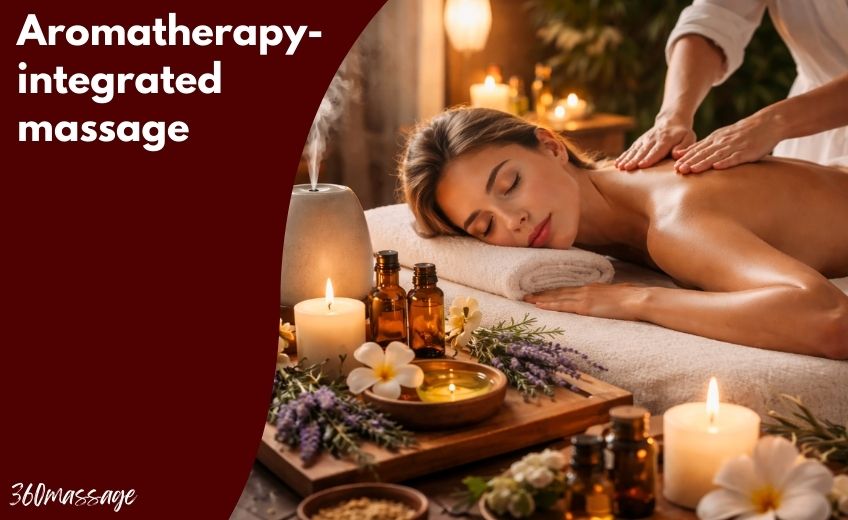
Everything about an aromatherapy-integrated massage
There are massages that work your muscles, and then there are massages that work you. Aromatherapy-integrated massage belongs firmly in the second category. It’s where skilled hands meet carefully chosen essential oils, and the result feels less like a treatment and more like a quiet reset button for your nervous system.
At its core, aromatherapy massage blends traditional massage techniques with therapeutic plant oils to support relaxation, pain relief, and emotional balance.
What is aromatherapy-integrated massage?
Aromatherapy-integrated massage combines hands-on massage with intentionally selected, diluted essential oils, applied to the skin and often diffused into the air. The oils aren’t decorative; they’re chosen to support a specific goal, whether that’s relaxation, relief, focus, or recovery.
Unlike standard massage, where oil simply reduces friction, aromatherapy treats it as an active element. The physical effects of massage are layered with the neurological and physiological impact of inhaled and absorbed plant compounds. It’s subtle but your brain feels it.
How does it work?
Aromatherapy massage works through a two-lane effect:
- Touch: Massage relaxes muscles, calms the nervous system, and boosts blood and lymphatic flow.
- Scent: Inhaled essential oils activate brain areas tied to emotion, memory, and stress.
During the session:
- Essential oils are diluted in carrier oils such as sweet almond or jojoba
- The therapist works the oils into your skin through massage
- At the same time, you breathe in the aroma, allowing the oils to work on both a physical and neurological level
This engages the body and mind at the same time creating deeper relaxation, faster stress relief, and a more balanced response overall.
What are the key benefits of aromatherapy-integrated massage?

Aromatherapy-integrated massage isn’t about adding fragrance for ambiance. It’s about amplifying outcomes. Some of the most common benefits include:
- Deep relaxation and stress reduction
Calming oils paired with rhythmic massage techniques help activate the parasympathetic “rest and digest” response, lowering stress hormones and quieting mental noise. - Improved sleep quality
Gentle massage combined with sedative oils can help reset sleep patterns, especially for people who struggle to fully unwind at night. - Reduced muscle tension and pain
Smooth, flowing strokes relax tight muscles, while cooling or warming oils can enhance relief in sore or overworked areas. - Better circulation and lymphatic flow
Massage encourages blood movement and lymphatic drainage, reducing feelings of heaviness and fatigue. - Emotional balance and mental clarity
Certain aromas can elevate mood, reduce anxiety, or sharpen focus useful when stress shows up as brain fog rather than muscle knots.

Common essential oils for aromatherapy and their effects
While every therapist has their favorites, a few oils show up regularly for good reason:
- Lavender: Calming, sleep-supportive, and grounding. A classic for stress and insomnia.
- Chamomile: Soothing and gentle, often used for nervous tension and emotional irritability.
- Geranium: Balancing and supportive for circulation and hormonal discomfort.
- Citrus oils (orange, lemon, grapefruit) are bright, uplifting, and mentally energizing.
- Peppermint: Cooling and refreshing, commonly used for headaches and muscle soreness.
- Eucalyptus: Clarifying and decongesting, especially helpful during cold or allergy seasons.
Most therapists don’t use these oils in isolation. Blending allows them to create synergistic combinations designed to support stress relief, recovery, or emotional grounding without overwhelming the senses.
What to expect in a session
An aromatherapy massage usually begins with a short consultation. You’ll talk about your goals, relaxation, pain relief, sleep, recovery as well as any sensitivities or scent preferences. This is where personalization happens.
Once the oils are selected, the massage itself tends to be gentler than deep-tissue work, especially in spa-style sessions. Pressure can be adjusted, but the emphasis is often on flow rather than force. The room is typically quiet, dimly lit, and designed to reduce sensory clutter. In other words, it’s very hard to multitask there.
A good therapist will also explain what oils are being used and why. That small explanation often makes the experience feel more intentional and more effective.
Safety, contraindications, and who should avoid it
Aromatherapy massage is generally safe when done professionally.
- Essential oils must be diluted. Undiluted oils can irritate the skin or cause sensitivity.
- Patch testing is recommended for allergies or sensitive skin.
- Citrus oils may increase sun sensitivity, so limit sun exposure after treatment.
You should consult a healthcare provider and inform your therapist if you have:
- Asthma or respiratory conditions
- Epilepsy or heart conditions
- Active infections or recent surgery
- Are you pregnant (some oils are not recommended)
Most importantly, aromatherapy massage is a supportive therapy, not a medical treatment.
It enhances wellbeing and it doesn’t diagnose or cure.

How to do an aromatherapy massage at-home?
At home, aromatherapy massage should stay simple. Mild oils like lavender or sweet orange, used at low concentrations, are usually enough. A drop or two in a teaspoon of carrier oil goes a long way.
Stick to self-massage areas like shoulders, neck, hands, and feet. Avoid broken skin, sensitive areas, and anything that feels uncomfortable. Keep oils away from children and pets, and store them properly.
For chronic pain, complex health conditions, or deep emotional stress, professionals are worth it. Sometimes the most relaxing decision is letting someone else handle the details.

Comments
Add a Review
Your email address will not be published. Required fields are marked*
Design Your Chair Yourself





333985
wish you best and best